
The science of Havass is the collective name for disciplines that aim to recognize the material and spiritual properties of the realms created by God Almighty and to benefit from them for the good of humanity. It is not a single branch of knowledge but a broad umbrella encompassing many sub-disciplines. Therefore, it is not easy today to definitively judge that someone is an "expert" in the science of Havass.
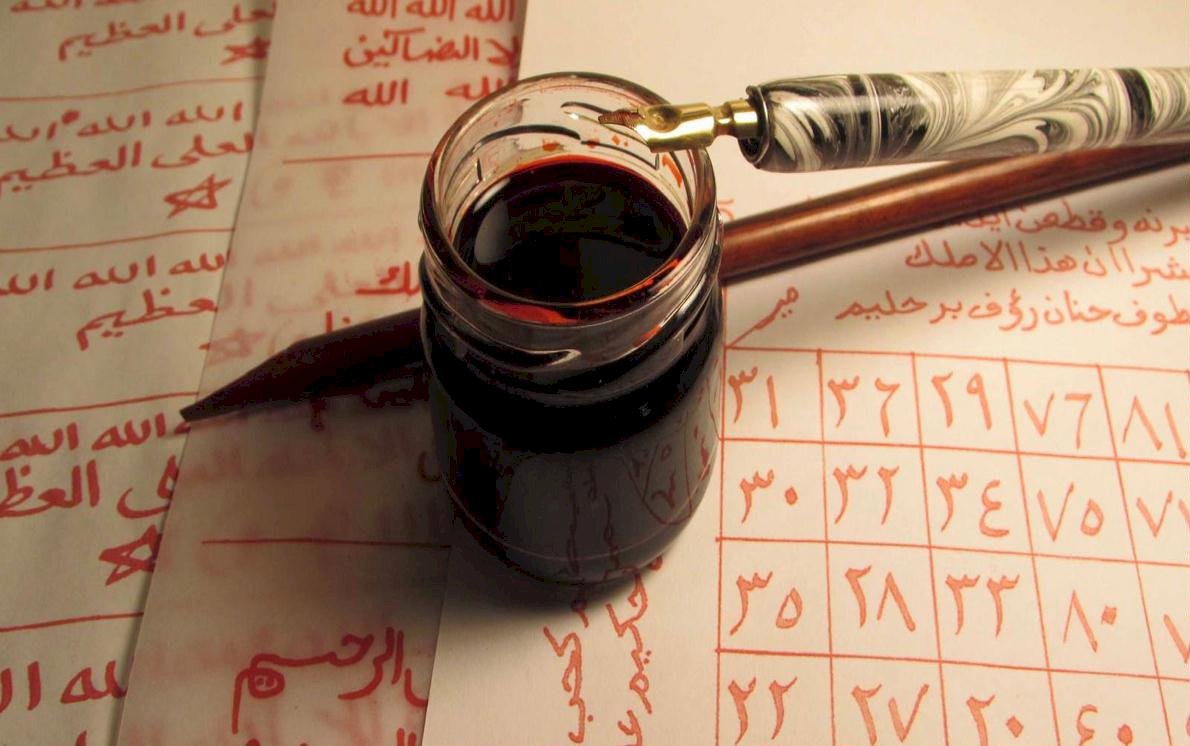
Disciplines It Encompasses
The science of Havass relies on the following material sciences:
- Human beings and anatomy
- Mathematics
- Physics and astronomy (the science of zodiac signs)
- Chemistry and knowledge of nature
It encompasses the following spiritual sciences:
- The science of abjad
- The science of cifr
- The science of Asma al-Husna
This knowledge is combined with the deep meanings of the Noble Qur'an, which we call "secrets," to seek material and spiritual solutions. Havass is a science related to spirituality; however, it is incorrect to think it consists solely of commanding jinn. The Qur'an has an apparent face (zahir) and a hidden face (batin); the science of Havass deals with this second face.
The History of the Science of Havass
The Havass tradition traces its source to the Prophet Muhammad (peace be upon him). Verse 102 of Surah Al-Baqarah mentions two angels named Harut and Marut; this verse is frequently recalled when discussing the history of hidden knowledge. The tradition accepts that the order of the material realm operates in conjunction with the laws of the spiritual realm. There have been very ancient peoples and civilizations who recognized and applied these laws; it is narrated that Prophet Solomon (peace be upon him) also knew this science. According to the Havass tradition, the Prophet transmitted this science to Ali, and the knowledge continued from generation to generation.
The Messenger of Allah (peace be upon him) said: "I am the city of knowledge, and Ali is its gate. So whoever desires knowledge should come to the gate."
It is narrated that Ali said: "This (the Qur'an) is Allah's silent book; I am Allah's speaking book."
Its Sources and Scholars
The book attributed to Ali regarding the science of Havass is titled Cifr. This knowledge reached later scholars such as Muhyiddin Ibn Arabi, Imam Ahmad al-Buni, and Imam Al-Ghazali. Havass is an Islamic science; it should not be confused with paths considered diabolical, such as Kabbalah. Our ancestors also knew and used this: prayers, talismans, and vefk (magic squares) are frequently found on the caftans, swords, daggers, helmets, and seals of sultans.
Prayer is raising one's hands and supplicating to God Almighty; so to speak, it is a verbal appeal. The science of Havass is the written form of the same appeal. The aim in this science is to seek help, by God's permission, through angels and spiritual servants. Obtaining an ijazah (license) to engage with Havass is not always a prerequisite; however, some specific prayers and formulas are exceptions to this.
Prayer, Vefk, and Talisman
The most important practices of the science of Havass are prayer, vefk, and talismans. These are seen as a gift to believers and a divine mercy. Reciting and writing Qur'anic verses with the intention of healing is also a tradition that has continued for centuries; of course, it does not replace medical diagnosis and treatment.
According to narration, a person's prayer ascends towards the Throne through the angels. On the way, it encounters a calamity that might befall the person, and a struggle occurs between them. If the prayer prevails, it is accepted; if they are equal, neither the request is fulfilled nor the calamity descends; if the prayer is defeated, the distress the person is in continues for a while longer.
Methodology in Havass
Everything done in Havass is aimed at strengthening the prayer. Therefore, the following are recommended in many books:
- Taking a ritual bath (ghusl)
- Performing prayer, repenting, and seeking forgiveness
- Reciting salawat (blessings upon the Prophet) before and after prayer
- Paying attention to the cleanliness of the room, one's clothes, and one's mouth
- Incensing the room with a pleasant scent
- Giving charity
It is accepted that evil spirits (arwah-i habisa) gather in foul-smelling places, while pleasant scents repel them and invite good spirits (arwah-i tayyiba). In the Hadith, it is reported that prayers made between two salawats are accepted, the sins of those who repent and seek forgiveness are forgiven, and prayers after prayer are close to acceptance. All these conditions are to strengthen the prayer.
In prayers, it is required to recite certain names of God Almighty, prayers, verses, or surahs a specific number of times. These numbers must be adhered to literally: if 40 is stated, 40 are recited; one does not recite 50 thinking "it would be better." A wrong key does not open the door. Each surah, verse, and name has its own hudam (attendant servants), and each has a different duty; the hudam of Surah Al-Fatiha does not perform the duty of the hudam of Surah Al-Ikhlas.
In addition to these, one must also know the abjad calculation, the luminous (nurani) and dark (zulmani) nature of letters, the natures of the four elements and their harmony and opposition with each other, the properties of planets, their letters and incenses, auspicious (sa'd) and inauspicious (nahs) times, the properties of zodiac signs, the lunar mansions, and which zodiac sign the Moon and Sun are in.
Are Havass and Vefk Forbidden?
The answer to this question lies in the hadith "Actions are judged by intentions." Almost every home has a knife; can the knife be called forbidden because it is sometimes misused? What matters is what is used and with what intention. Havass must also be practiced only with good intentions and without harming anyone's will.
In Topkapi Palace, the relics of the Prophet (peace be upon him), Abu Bakr, Umar, Uthman, and Ali are displayed. Many of the sultans' outfits, swords, and shields in the palace contain verses, talismans, or vefk. These were written by the greatest scholars of their time.
Everything is ultimately presented to that great gate, the presence of God. People visit the graves of saints and pray; the main purpose is for God Almighty to accept their wishes out of respect for that saint. This is receiving blessings from the spirituality of the saint. The science of Havass is the written form of this.
What Is Inside a Vefk?
Within the vefk (magic square), there is nothing other than verses from the Noble Qur'an, prayers, hadiths, works based on the abjad calculation of verses, talismans, and spiritual information regarding the names of angels. It is accepted that carrying these causes no harm to anyone. Unfortunately, because this science is belittled in society, many works written by our scholars have been left to rot in locked safes or taken abroad. The works of great scholars such as Ibn Sina also do not receive the attention they deserve in our own country.
For your questions about Havass science, WhatsApp: 0547 953 63 63.
The information on this page has been transmitted from classical sources; it carries no promise of results and does not replace medical diagnosis/treatment.